We are pleased to announce the winners of the EISA Dissertation Fieldwork Support Grants
-
- Su Kaiqing
- Lauren Dahler
- Saniah Matengu
- Diana Eriksson Lagerqvist
- Mateus Schneider Borges
- Markus Pollak
Many PhD candidates writing their dissertations in International Studies use fieldwork data. However, due to various reasons (scholarship type, institutional budgetary cuts), they lack the finances for fieldwork travel. EISA Dissertation Fieldwork Support Grant aims to support this crucial part of PhD research through the provision of a one-time payment aimed at covering travel and accommodation expenses.
25% of EISA members and PEC/EWIS attendees are PhD candidates. Apart from the Mobility Fund and Early Career Workshops at PEC, the EISA has also supported their academic work after the PhD through the Postdoctoral Bridge Grants in the last year. This grant scheme supporting dissertation fieldwork will add to our existing funding schemes to support early career researchers, especially those who face different forms of precarity and structural inequality and discrimination.
The recipients will utilise the EISA funding to work on the following fieldwork projects:
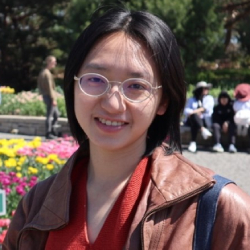
Su Kaiqing
University of Hawaiʻi at Mānoa
Concrete Connectivity: Chinese Infrastructure and the Making of Oceanic Relations in the Blue Pacific
My research investigates how China’s concrete infrastructures of the Maritime Silk Road Initiative (MSRI) shape experiences and meanings of connectivity in Pacific Island communities, with the focus on Fiji and the Solomon Islands. Drawing from thinkers of oceanic relationality, I argue that connectivity cannot be reduced to logistical circulations or geopolitical influences, but emerges through forms of human relations and collective political action. I theorize the construction material of concrete as a political medium in the Pacific through which connectivity is experienced, interpreted, and contested in everyday life. Situated in the regional framework of the “Blue Pacific,” this project examines whether Chinese infrastructure fosters ocean relations in terms of transnational alliances, oceanic intimacies, and collective actions.
The EISA Dissertation Fieldwork Support Grant will specifically support my fieldwork in the Solomon Islands, where I investigate the techno-politics of port construction and embodied interpretations of China’s geopolitical influence. During fieldwork, I will conduct participatory observations at various infrastructure sites and interview state and non-state actors including local residents, NGO personnels, government officials, workers and other development actors. This empirical and embodied account thus highlights the materiality of infrastructure development that is integral to understanding China’s international and transnational presence.

Lauren Dahler
Ulster University
My doctoral research examines how female survivors of conflict-related sexual violence (CRSV) in northern Uganda conceptualize, access, and navigate justice amid ongoing gaps between transitional justice policy and lived reality. My fieldwork will take place across two visits in 2027 in the Acholi sub-region in partnership with Refugee Law Project.
During my first field visit, I will conduct semi-structured interviews with female CRSV survivors. These interviews will explore how justice is defined, negotiated, and accessed through formal and informal transitional justice mechanisms, as well as how existing policies align, or fail to align, with survivors’ experiences and priorities. I will also conduct a focus group discussion with Acholi civil society organizations to examine the organizational perspectives on barriers survivors face in accessing justice and how these organizations help them navigate available mechanisms.
The fieldwork will conclude with a second visit where I will facilitate a participatory workshop with previously interviewed survivors to explore their understandings of justice through creative activities, collaboratively validate preliminary findings, and co-develop recommendations for improving access to justice. By employing a survivor-centered and participatory approach, my research aims to prioritize women’s narratives and support more collaborative forms of knowledge production.

Saniah Matengu
European University Institute
My dissertation begins from the observation that, although South Africa’s democratic transition achieved profound political change, many young people continue to live with the social and economic effects of apartheid, colonialism and persistent structural inequality and violence. We have a limited understanding of how young South Africans, often referred to as the “born-frees,” inherit and interpret the (broken) promises of transitional justice and make sense of freedom, citizenship, and belonging in this context. My project addresses this gap by developing the concept of what I term the ‘postcolonial young citizen,’ which seeks to capture how coloniality, patriarchy, and generational memory continue to shape the lives and futures of young South Africans. During my fieldwork in South Africa, I plan to conduct and facilitate focus group discussions and carry out individual semi-structured interviews with young South Africans in order to explore how they understand their identities, their opportunities, and their relationship to the country’s past and present.

Diana Eriksson Lagerqvist
Lund University
My PhD research project titled Between Imagined and Enacted Futures is situated in environmental politics and seeks to understand imaginaries and political subjectivity taking shape in times of environmental and climate crises. More particularly, this dissertation studies eco communities – bottom-up initiatives that experiment with and demonstrate collective ways of living, food and energy sufficiency, and engaged forms of democratic decision-making. These communities are studied to understand whether – and if so, how – people and collectives develop relationships of care by imagining and practicing ecologically sustainable futures in their everyday life, and what forms of subjectivity emerge in this process. As imaginaries and subjectivities are negotiated, this dissertation explores what happens between imagined and enacted futures. The EISA Dissertation Fieldwork Support will make possible ethnographic fieldwork in two eco communities in Spain, which represents one of three core ethnographic contexts in which the dissertation studies eco communities. During the fieldwork data will be collected through interviews and participatory observations, which will be carried through as a part of stay-in-visits in the eco communities.
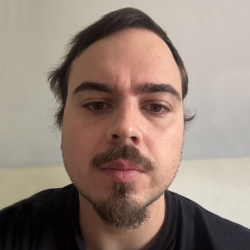
Mateus Schneider Borges
McMaster University
My research investigates revolutions and revolutionary thought through the experiences of political activists from Iran. I want to answer the following question: how do political activists experience a revolution as an affective phenomenon? My goal is to explore what sustains revolutions as continual sources of political mobilization lived and experienced on an everyday basis. To do this, my dissertation investigates the connections between the 2022/23 Women, Life, Freedom uprising and the legacies of the 1978/79 revolution. I am hoping to learn how people who participated in these processes respectively constructed their movements as revolutions and themselves as revolutionaries and connected different struggles across time (previous waves of radical revolt) and space (other peoples in the country, region, and the world). I also hope to find out how such revolutionary experiences were sustained through the work of affects, and how these affects were crucial in energizing activists on the ground. My fieldwork in Vancouver will involve interviews with exiled activists from the Iranian diaspora in Canada to understand their local organic social networks and the revolutionary archives on which their political mobilization and subjectivities rely.
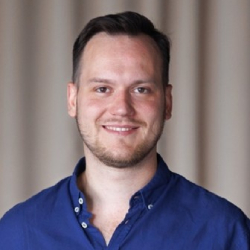
Markus Pollak
Central European University
My PhD project examines international election observation missions. Understanding election observation as a transnational practice of liberal international ordering, I trace its trajectory from the rapid expansion of the 1990s to its present existential crisis. Drawing on a Bourdieu-inspired approach in International Political Sociology, I show how reproductive, reformist, and subversive strategies structure the struggles within this field – struggles that are driving a decline in liberal election observation, both in the number of observers and in their political weight and authority. Alongside interviews and archival research, this project involves a significant amount of participant observation (as an OSCE and EU observer, which partly positions me inside the field I study) and engagement with the careers and professional assumptions of practitioners.
The EISA Dissertation Fieldwork Support Grant allows me to extend this study to the American subfield, where these struggles are especially acute – particularly since 2025, when the termination of USAID-funding led to the lay-off of a large share of US-based observers. In Washington, DC, and Atlanta, I will conduct archival research and interview practitioners at the Organization of American States (OAS), the Carter Center, the National Democratic Institute (NDI), and the International Republican Institute (IRI), four organizations that significantly contributed to the construction of the field of election observation and now find themselves on the front line of its existential crisis.”