
 About
About
EISA’s new Book Series, published by Oxford University Press (OUP), furthers the development of research at the frontiers of International Relations (IR). It expands the remit of the field by including innovative scholarship that broadens debates about key issues in IR, but it is more interested in scholarship re-problematizing IR and its ‘key issues’ of concern by approaching it from inside and outside the conventional core. We are committed to furthering diversity and inclusion in terms of authorship, location, topics and approaches from both inside and outside Europe. We have an inclusive approach to neighbouring disciplines, be it sociology, history, anthropology, geography, economics, political theory or law.
We know that IR has expanded considerably over the past two decades. The space occupied by the discipline in universities has steadily grown and with it the number of professional researchers and students working in the field. The scope of the discipline has also been extended both empirically and theoretically. The discipline has become less state-centric, more sensitive to theoretical and empirical diversity, more attuned to methodological innovation and more reflexive regarding the positionality of researchers. New approaches, themes, and forms of authorship therefore proliferate. These developments are to be welcomed, but they also come at the possible price of disciplinary fragmentation with a lack of communication across ‘camps’ (to echo Christine Sylvester). With no connecting communication, the discipline loses its sense of community and so also its capacity to embrace newer developments. Innovative exploration may be occurring in IR’s frontiers, but the core remains relatively unchanged. Journals and Book Series have often both reflected and reinforced this trend towards increasing specialization.
The EISA/OUP Voices Book Series aims to counter this trend. It is oriented around two principles: a pluralism that allows a diversity of approaches and scholars to be represented, and an ethos of communication that forges new connections between ‘the camps’ that currently constitute IR. This means exploring the new, connecting it to the established and cultivating a discipline that must (therefore) see itself as dynamic, multiple and evolving. Voices cultivates a sensibility to the research foci and approaches of a diverse range of authors positioned at the edges of the current reproduction of the discipline. Thematically, we aim to publish research that pushes the limits of IR conventionally defined from within and research that connects to it from without, for example, from queer, decolonial, legal, anthropological, philosophical, architectural or new materialist perspectives. A core ambition of the series is to remain at the frontiers of the discipline and so to encourage and support upcoming and emerging work while nourishing dialogue. This requires sensitivity to the potential of emerging themes and scholars not already sanctioned by academic hierarchies, and a willingness to actively support them.
Books in the Voices in International Relations Series
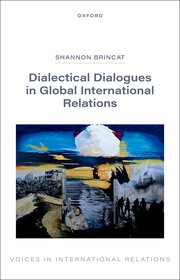
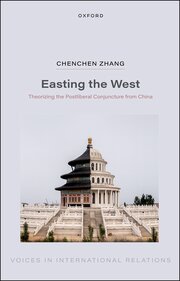
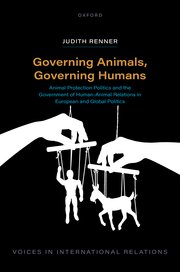


EISA members get 30% discounts on EISA-OUP Voices in International Relations Book Series.
The discount code is available on the membership portal.
Proposal Submission
Types of Submission:
This series will publish high-quality, innovative and ambitious research manuscripts that extend the disciplinary horizons and conventional debates within IR
-
- Manuscripts will consist of original research
- Manuscripts can be single, co or multi-authored.
- Manuscripts will be in the range of 200-360 pages.
- It is the author’s responsibility to secure permissions for any images included in the manuscript. These will be reprinted in black and white for print, but colour for e-books.
How to Submit Your Proposal:
Given our commitment to pluralism and communication, Voices offers most prospective authors flexibility for proposal submission (for PhD theses and edited volumes, see below). Our aim is to maintain standardized submission principles while also recognizing and respecting diverse writing practices in IR. With that in mind, submissions will have the following:
-
- Book Proposal: See Voices Book Proposal template below ⬇️
- 2 page Author CV: please prioritise a full publications list and employment history
- Substantive Material: See different models below ⬇️
The length and focus of the proposal and substantive chapters is at the discretion of the submitting author. However, for most manuscripts the common models of submission are the following:
| Model 1 | Model 2 | Model 3 |
| Book Proposal (10-12 pages, operates as an introduction) | Book Proposal (4-5 pages) | Book Proposal (4-5 pages) |
| 2 substantive chapters | Introduction | Full Manuscript |
| 2 page CV | 1 substantive Chapter | 2 page CV |
| 2 page CV |
All proposals and CVs submitted to Voices should be in 11 pt font, normal margins (2.54cm). All material, including substantive manuscript chapters, should be submitted through the online form.
For Edited Volumes:
For submissions of edited volumes with multiple authors, we require the full manuscript before we begin the review process. We will also require additional information on submitting authors:
| Edited Volumes (Model 3) |
| Book Proposal (4-5 pages) |
| Full Manuscript |
| 2 page CV of Editors |
| Short (i.e. 100 words) bios of each submitting author |
For PhD Dissertation:
For any PhD Dissertation that is being turned into a full manuscript, we require the full REVISED manuscript. In the book proposal (see below), you will need to provide an additional section at the beginning outlining the revisions you have undertaken to the PhD Dissertation. For guidance on this, see below ‘Specific Guidance for Turning your PhD into a Book’.
| PhD Dissertations into Books (Model 3) |
| Book Proposal (4-5 pages – remember to include an additional section outlining the revisions you have made to the PhD Dissertation) |
| Full Manuscript |
| 2 page CV |
Voices Book Proposal Template:
When completing your submission package to Voices, please use the following template for the Book Proposal:
-
- Title & Progress
Provide the proposed title of the manuscript and clearly state its current status (i.e. is it already drafted in full? If not, when is the estimated delivery date?) - Duplication
Please indicate whether any of the manuscript has already been published. We operate with the ‘20% Rule’ meaning the equivalent of ONE chapter, or up to 20% of the work, may already be published. - Overview & Contribution
This section should provide an overview of the core argument of the book and a clear summary of its main contributions to current debates in IR. It should include an account of the main theoretical framework and research methods used, and a summary of how these are developed through substantive / empirical chapters. This is the most important section of the book proposal: the central argument of the book should be explained in clear, forceful and compelling language. - *FOR PhD DISSERTATIONS ONLY* Account of Revisions:
For submissions based on PhD Dissertations, you must provide a clear and concise account of the revisions you have already made to the PhD dissertation. How have you revised the PhD Dissertation so that it is now a fully-fledged book manuscript? (please see further guidance below) - Series Fit
This section should demonstrate how your book manuscript fits with the ethos of the EISA-OUP Voices in International Relations Series (see above). For example, does it reconfigure existing debates within IR? Does it mobilize transdisciplinary insights to ask new questions of conventional IR research topics? It is very important that this section explains why the manuscript should be published by this book series and not any other. - Competition
This section should briefly position the manuscript in relation to the most relevant books currently published on this topic in IR and, if appropriate, its adjacent disciplines. The main purpose here is to show how the proposed manuscript is different from its competitors and how it adds original research to existing debates. - Audience
This section should briefly explain the target audience for this book in terms of (sub)-disciplines, adjacent disciplines (if appropriate) and level of reader, bearing in mind the central audience will be academic researchers across IR. - Table of Contents
This section should provide a full Table of Contents with Chapter headings and brief summaries. This should not provide empirical detail but should focus instead on showing how each chapter contributes to the central argument and narrative of the book.
- Title & Progress
Turn your PhD into a Book
Specific Guidance for Turning your PhD into a Book:
One of the most common questions prospective authors ask is how to turn a PhD dissertation into a viable book. There are many resources online to help you think about this, including general advice such as PhD Progress and PhD Studies , as well as advice from other disciplinary Associations. Given our pluralist ethos, we do not want to be overly programmatic about the PhD / Book distinction. However, if you have completed your PhD and are in the process of transforming it into a book for submission to Voices, we would encourage you to consider the following:
-
- Positioning yourself in the field with confidence: In a PhD, you must show deference to those who have come before you and demonstrate your knowledge of the existing literature and debates. Positioning yourself within the field is crucial, but a book requires a much more confident and original voice. Pragmatically, this often means losing the required (a) ‘Literature Review’ chapter; and (b) ‘Methodology’ section or chapter, and reducing deferential language throughout the overall manuscript. Successful PhD transformations find creative ways to redistribute these key elements and insights into their analysis elsewhere in the PhD thesis.
- Announce your project with authority: Be absolutely clear about what is original about your contribution to IR and how it takes existing debates forward. Cultivate your own voice from the very first sentence. Make sure your Introduction is excellent: this is the chapter that everyone will read so you want it to be compelling, concise and powerful. If your PhD is very specialized, it would be worth considering how the argument can be made more appealing to a broader IR audience.
- Be strategic about pre-publication / duplication: How much of your book can consist of pre-published material (e.g. journal articles; chapters in edited books)? For US based University Publishers, this can be up to 33%, but for some UK publishers this is as low as 10%. At Voices in International Relations, we follow the ‘20% Rule’. This means that one chapter of your proposed book, or up to 20%, can consist of the journal article you have already published. Anything over 20% decreases the originality of the manuscript making it unviable for academic publishers.
- Revise the PhD before submitting: no matter how minimal, some effort is needed to revise the PhD into book form. A book is a different beast than a PhD, and it is important to recognize these ‘generic’ differences. The general rule is that the scope and audience of a book are much broader than a PhD. It is likely that the examiners of your PhD gave you good advice on how to do transform your work, and you should certainly have these conversations with your mentors and supervisors. You must do this revision work before you submit your manuscript to Voices in International Relations.
- Include an account of your revisions in your book proposal: Remember to include a clear and concise account of the central revisions you have made to your PhD in your book proposal. You need to convince the Series Editors and any potential referees that you are no longer a PhD student: you are now an important voice in the field who is making original, compelling and confident contributions to important debates.
- Positioning yourself in the field with confidence: In a PhD, you must show deference to those who have come before you and demonstrate your knowledge of the existing literature and debates. Positioning yourself within the field is crucial, but a book requires a much more confident and original voice. Pragmatically, this often means losing the required (a) ‘Literature Review’ chapter; and (b) ‘Methodology’ section or chapter, and reducing deferential language throughout the overall manuscript. Successful PhD transformations find creative ways to redistribute these key elements and insights into their analysis elsewhere in the PhD thesis.
Process of Decision Making
Each submission will be read and discussed by the EISA Series Editors. They will make a collective decision as to whether the manuscript will be forwarded to OUP for consideration. If required, the EISA Series Editors will consult their Advisory Board for guidance in specialist subject areas. In some cases the Series Editors will suggest revisions. Successful projects will be sent to OUP with a collective assessment from the EISA Series Editors. Once the project is forwarded to OUP, the publishers will take over the process and the project will enter their peer review process which is outlined here.
The Series Editors will be in contact with OUP throughout this process.
Governance
Voices Governing Structure
Series Editors
Debbie Lisle (E-i-C), Queen’s University Belfast
Tanja Aalberts, VU Amsterdam
Anna Leander, Graduate Institute Geneva / PUC Rio
Laura Sjoberg, Royal Holloway University of London
Advisory Board
Tarak Barkawi, Johns Hopkins University
Noé Cornago, University of the Basque Country
Scarlett Cornelissen, Stellenbosch University
Thomas Diez, University of Tübingen
Naeem Inayatullah, Ithaca College
Beate Jahn, University of Sussex
Caroline Moulin, UF Minas Gerais, Brazil
Burak Tansel, University of Newcastle